
Read moar goodley
Musing about Literacy

So, I’ve been working my way through 1The Count of Monte Cristo, seriously good stuff, and it’s got me thinking back to a conversation Jason Farley and Chocolate Knox were having on the Knox Unplugged Podcast a few years ago. He said something to this effect:
“literacy isn’t just reading the words, it’s about catching the bigger conversation authors are having across time.” - Jason Farley (extreme paraphrase lol)
As I’m working through the book Dumas keeps tossing out references about some old play, or a poet, characters like Sinbad the Sailor, Arabian Nights et cetera..et cetera… He doesn’t explain it; he just winks at you with a knowing look “Let the reader understand”. And when I don’t, I feel like I’m missing half the story and part of me wants to stop reading this book to fill in my knowledge gap on all the references.
So clearly there is more to simply being able to read the words on a page.
Literacy is a grander idea.
Philosophy is like this as well. I’ve been attempting to read 2Science, Politics & Gnosticism by Eric Voegelin. Not a large book, but extremely hard to work my way through because I simply don’t have the vocabulary of the long train of philosophical ideas that have been shortened to compressed terms like “immanentizing the eschaton” or “pneumopathological alienation.” These are distillations of centuries of thought… Hegel’s dialectic, Plato’s anamnesis, medieval debates on chiliasm. Voegelin assumes a familiarity with the historical and metaphysical framework packed into each phrase, and frankly, he should. He’s not writing a beginner’s guide; he’s making a point built on those foundations. It’s on me to catch up, and that struggle just drives home the same thing Dumas is doing… Real literacy is being able to take part in the greater conversation.
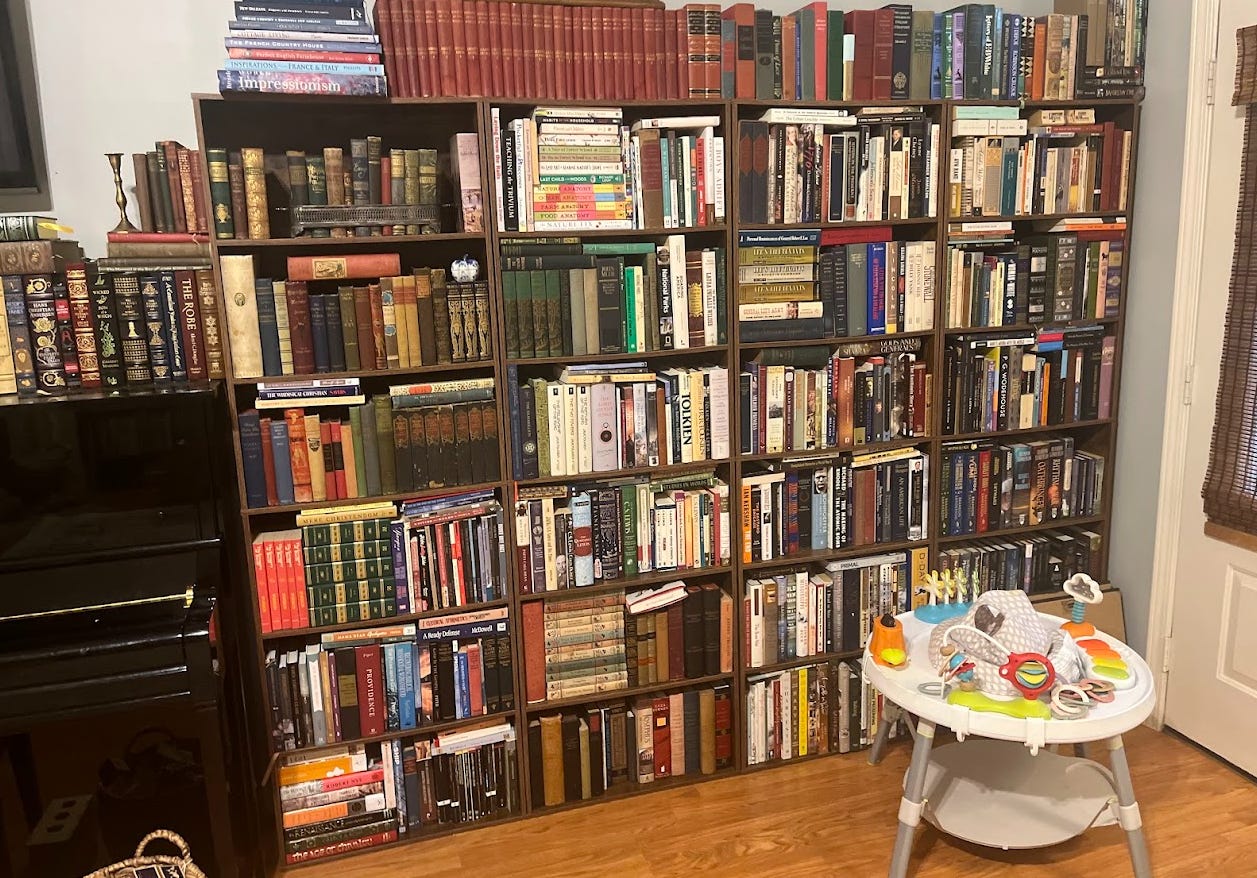
Still, I can’t help but wish I’d started this sooner. I’m 41 as I write this, and I keep wondering why the classics and poetry never grabbed me earlier. Why do these things seem tedious when you’re young, only to turn captivating later in life right when the time to dig into them really starts running thin? I look at our bookshelf, stuffed with the significant number of books we’ve added over the past three years, and I catch myself counting: at a steady minimum pace, how many years will it take to finish them… how many books can I squeeze into the rest of my life? Voices of my young children then catch my attention and I make promises to find a way to instill that desire in them, but know not how. Please advise.
footnotes:
Link earns commission.
Link earns commission.
My husband and I were actually talking about this. It seems like the modern obsession with sourcing is actually a sign of illiteracy. You need to source when no one has read the other things. If everyone has read it, then the reference can be assumed. No one will think you are a thief.
All that to say, Bullfinch is very helpful as well as English children’s novels like Arthur Ransom’s Swallows and Amazons because they actually note the reference. In Bullfinch’s case, he explains it in detail with external quotes.
Woodhouse uses Keats without telling you, Ransom quotes Keats so you can at least know to look him up.
Books like Deeper Heaven are great because they take the quiet references of the Lewis’s Ransom trilogy and explain them.
Further up and further in 😅